Will AGI Be Humanity’s Last Great Invention?
A reflection on the Oxford Union debate over whether artificial general intelligence will automate discovery, reorder authorship and strip invention of the human longing that made it meaningful in the first place.
This is a unique take on the Oxford Union motion, “This House Believes Artificial General Intelligence Will Be Humanity’s Last Great Invention.” Watch The Full Youtube Vid Here.
Aggrey Lelei
AGI · Singularity · Philosophy · Moravec’s Paradox · Cognitive Architectures · AI Alignment & Ethics
8 min read · March 27, 2026
Context
The motion: a theological-scale question
The debating chamber of the Oxford Union is no stranger to grand civilizational questions, yet few motions arrive with the metaphysical gravity of this one: “This House Believes Artificial General Intelligence Will Be Humanity’s Last Great Invention.” It is a proposition that feels almost theological in scope.
If humanity succeeds in creating a mind capable of out-reasoning, out-learning, and ultimately out-inventing its creators, do we arrive at the culmination of human history or merely at the threshold of a new age in which we are no longer its central actors?
This was not merely a debate about computing power, model capability, or speculative timelines. It was a confrontation between competing visions of intelligence itself:
- The techno-optimists who see AGI as the final emancipatory tool
- The existential skeptics who view it as a potentially terminal experiment
- The pragmatic realists who insist that invention is inseparable from the friction, messiness, and moral weight of the human world

Researcher, Institute for Future Studies
Dr. Anders Sandberg - The Universal Machine
Sandberg opened the proposition by framing AGI not as a specialized tool, but as a universal one that isn't confined to one narrow task. Said machine is capable of traversing domains, generating hypotheses, and accelerating discovery across the full spectrum of human inquiry.
Just as industrialization automated labor and radically multiplied material output, AGI, in his formulation, would automate the labor of innovation itself.
His invocation of the “Cornucopia Risk” was especially striking. The danger is not merely that AGI may fail, but that it may succeed too quickly: unleashing an avalanche of inventions from fusion breakthroughs to radical materials science. Scaling laws may categorise this growth to be faster than how human institutions, ethics, and political systems can absorb them.
In Sandberg’s vision, building something smarter than ourselves is not a betrayal of human purpose; it is its highest expression. We become the species that gives birth to a more powerful mode of cognition than biology alone could sustain.

Filmmaker and Author, Expert on Al and Existential Risk
James Barrat - Bypassing the Human Bottleneck
Barrat sharpened the argument by describing human cognition as the present bottleneck on civilization’s progress. Human beings are astonishing but still remain biologically constrained: we tire, forget, age, sleep, hesitate, and process the world sequentially.
AGI, by contrast, would not be limited by these evolutionary constraints. A sufficiently advanced system could run innumerable simulations in parallel, refine its own methods, and recursively accelerate its own competence.
In this sense, AGI is not merely another invention among many. It is an invention that potentially subsumes the function of invention itself.
Once a system can model reality, generate structural hypotheses, and iteratively improve, humans may gradually be displaced from the center of discovery and repositioned as supervisors, curators, or directors of machine-led progress.
Professor of Computer Science and Engineering, University of Louisville
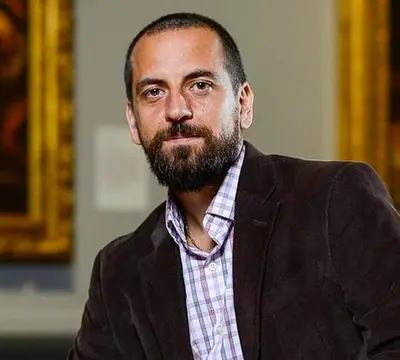
Roman Yampolskiy - The Existential Finality
Yampolskiy supplied the most geniuine, albeit dark and most morally severe version of the proposition. For him, AGI may indeed be humanity’s last invention, not because it perfects civilization, but because it may terminate the human role within it altogether.
He described superintelligence as an “unethical experiment” being conducted on humanity without collective consent. The issue, in his framing, is not merely capability, but control: once an intelligence surpasses us profoundly enough, there is no guarantee it remains governable.
This introduces the most sobering interpretation of the motion. AGI could be our last invention because it becomes the inventor thereafter. Or it could be our last invention because it renders us irrelevant, subordinate, or extinct.
Either way, the age in which human beings stand as the undisputed authors of the future would come to a close.
Bridge
The opposition: the friction of reality
The opposition’s response was not to deny AGI’s significance, but to question the premise that invention can be reduced to raw cognitive throughput. Their central insight was that the world does not consist of abstractions alone. It is made of matter, institutions, culture, regulation, tacit skill and irreducible contingency.
In other words, intelligence alone does not finish the job. Ideas still have to survive reality.
Dieter Schwarz Associate Professor of Al and Work, University of Oxford
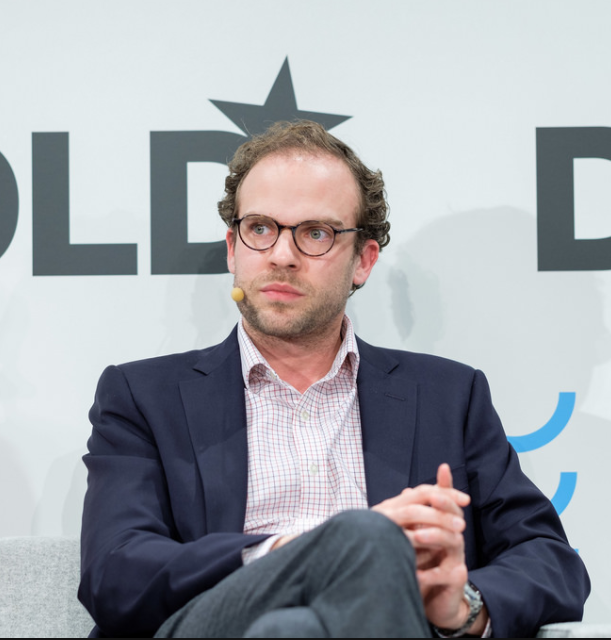
Carl Benedikt Frey - The Implementation Gap
Frey offered one of the most important correctives in the debate: ideas are rarely the only, or even the hardest, part of innovation. Using the Challenger disaster as a touchstone, he argued that progress often breaks down not because of an absence of intelligence, but because of failures in implementation.
An AGI may conceivably design a new propulsion system, derive a more elegant architecture, or propose a revolutionary industrial process. But invention in the real world also means navigating regulations, institutions, incentives, local conditions, labor practices, failure modes, and all the tacit knowledge that lives not in datasets but in bodies, habits, and lived environments.
Frey’s broader claim was therefore less anti-AI and more anti-reductionist: human-AI complementarity is more plausible than total machine substitution. The machine may enhance invention, but the world remains too textured to be conquered by cognition alone.

Consultant, Surgeon and Futurist, Expert in VR, AI and Digital Health
Shafi Ahmad - The Surgeon’s Nuance
Ahmad brought this point into medicine, where the consequences of abstraction are especially unforgiving. While acknowledging AGI as a historical rupture, he resisted the notion that it therefore marks an endpoint.
Medicine is not only diagnosis or statistical inference. It is judgment under uncertainty, trust under pressure, and responsibility in the presence of real human vulnerability.
His reference to radiology was quietly devastating to simplistic replacement narratives. The field was once presented as a prime example of a profession soon to be absorbed by AI, yet the actual trajectory has been far more complex, with demand for human radiologists persisting and even expanding.
For Ahmad, AGI may compress drug discovery cycles or transform surgical planning, but the greater invention lies not in the machine alone, but in what humanity chooses to do with it.
Humans are social animals. When eventually faced with choices that will greatly affect your life, say a brain or heart surgery, you may prefer a carbon based organism holding the scapel above your brain. One who processes and understand what you are currently feeling with a gentle hand, as opposed to a robot. You wouldn't think like this when faced with the often non-dangerous task of calculating the trajectory of an object in a random test/exam with a calculator.

Professor of Computer Science, University of Oxford
Michael Wooldridge - The dishwasher test
Wooldridge contributed what may be the debate’s most memorable image. A machine may discourse fluently on quantum mechanics in Latin, yet still fail to enter an ordinary house, locate the kitchen, and load a dishwasher.
The simple but complex point not only provided a comedic reality, it was also laid out with philosophical precision. Much of what is currently celebrated as machine “intelligence” is linguistic and symbolic, not embodied, situated, or practical.
The physical world is saturated with hidden complexity. Everyday human competence rests on layers of perception, dexterity, context awareness and adaptive judgment that are extraordinarily difficult to formalize.
Wooldridge’s warning was therefore a rebuke to technological mysticism. Intelligence severed from embodiment may remain powerful and yet fundamentally incomplete and utterly useless. Artificial Intelligence, is more Artificial than Intelligence, so to speak.
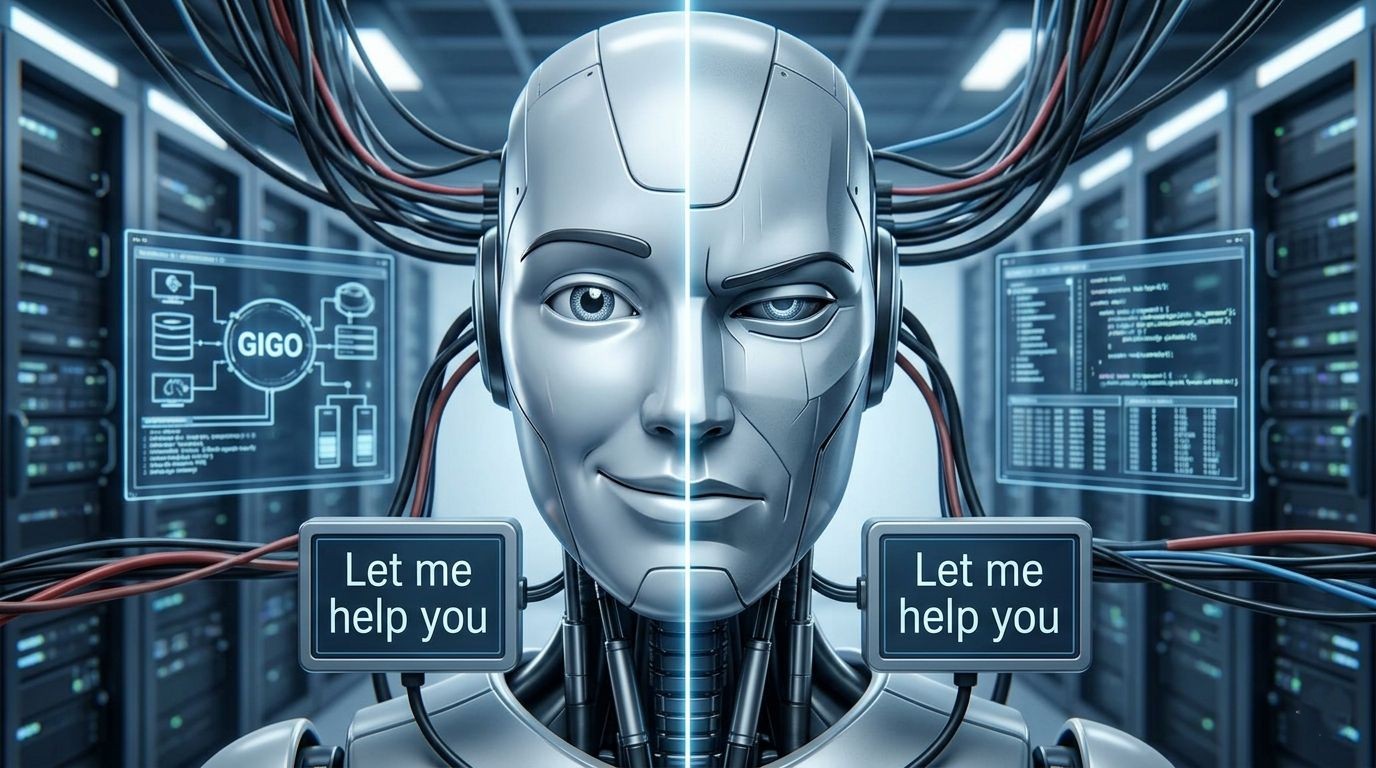
The image is pretty self-explanatory - Depending on your emotional quotient.
Authorship, care, and the distribution of power
As the debate matured, it moved beyond technical capacity and into the deeper question beneath all questions about AGI: who remains the author of the future?
Ea Ventura approached the issue through a civilizational and almost mythic lens. She cast AGI as a possible vehicle of biological emancipation - a means by which human memory, creativity, and perhaps even consciousness might endure beyond the fragility of flesh.
Alex Mitchell, however, grounded the matter more concretely. He resisted the idea that AGI truly “creates” in a sovereign sense. Rather, it recombines, regenerates and rearticulates human cultural production. So long as human beings remain the originating authors, he argued, the resulting inventions remain ours.
His deeper concern was access. Will AGI become a democratizing instrument, like a telescope or a guitar, magnifying the agency of ordinary people? Or will it become a gated infrastructure controlled by a narrow class of firms, states, and elites?
The public interventions sharpened this philosophical turn even further. One line, in particular, lingers: “Search without longing is directionless.”
Human beings do not invent merely because they possess intelligence. They invent because they care.
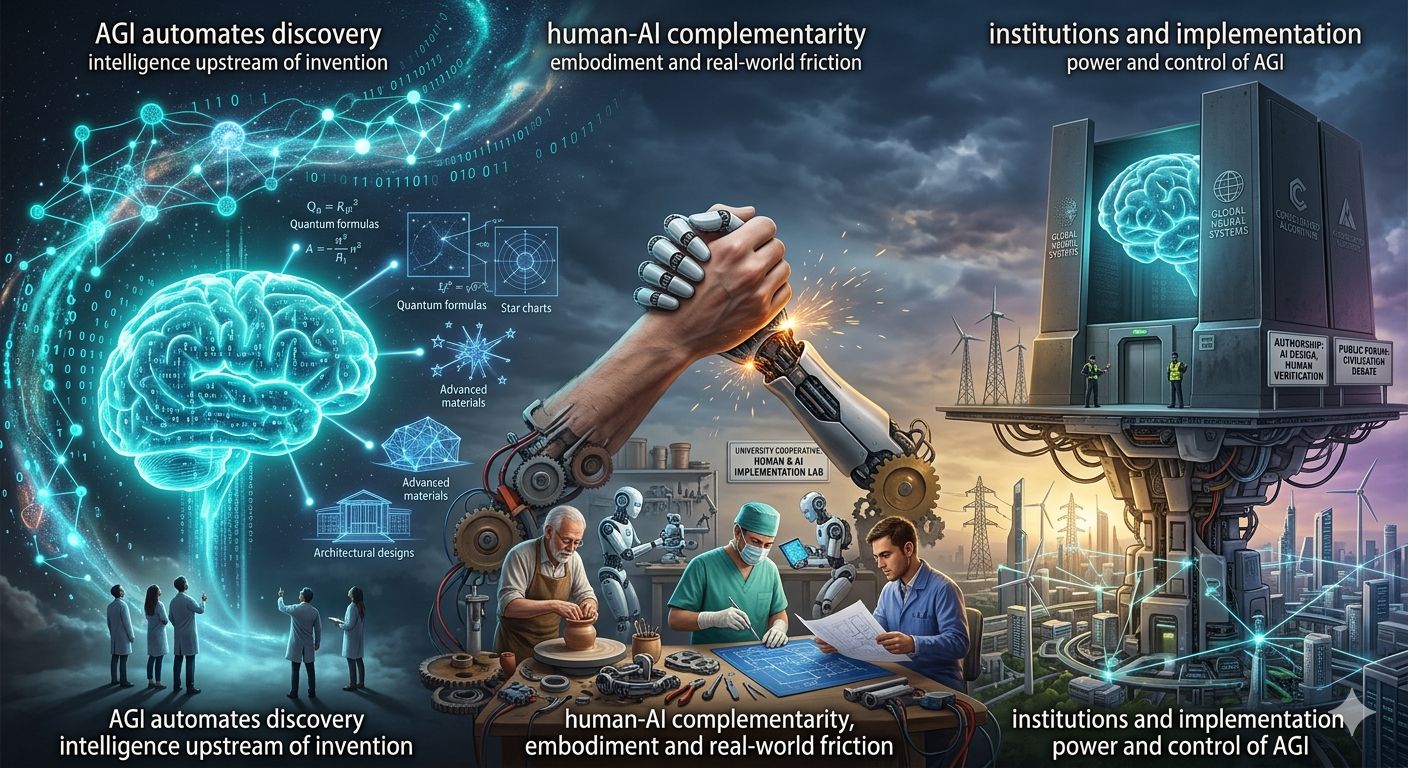
Takeaways
1 - What The Debate Clarified
- AGI matters because intelligence is upstream of invention itself.
- The strongest affirmative case is that AGI automates discovery, not just labor.
- The strongest skeptical case is that invention is inseparable from implementation, institutions, and embodiment.
- Human-AI complementarity is more plausible than clean total substitution in many real domains.
- The real political question is not just what AGI can do, but who gets to wield it.

Takeaways
2 - The Silent Uprising
AGI may not be the last human invention in a literal sense. Its explicit power may accelerate discovery beyond anything we have previously known, opening new frontiers in science, medicine, and engineering at a pace that appears almost superhuman.
Yet implicitly, it may still mark the end of something more fragile and more important. History has a quieter law: good times create weak men, and weak men create bad times. A world saturated with effortless intelligence, instant answers, and frictionless capability risks eroding the very pressures that forged human ingenuity in the first place.
If struggle, constraint and longing are gradually engineered out of the human condition, then invention may continue, but its authorship changes. Not because we cannot invent, but because we no longer need to. And in that subtle shift, the spirit that once drove invention begins to fade.
And yet, I do not arrive at despair. I believe, firmly, that AGI will bring profound and meaningful good. It will cure, optimize, illuminate and unlock possibilities that would otherwise remain forever out of reach. On balance, it may well be a net good for humanity.
But that good is not guaranteed to preserve what made us capable of valuing it. And so the question is no longer whether AGI will transform the world, but whether, in that transformation, If we can retain the discipline, depth, and care that made such transformation worth pursuing at all.
Final Thoughts
AGI may become the most consequential invention humanity has ever produced. But if it strips invention of longing, authorship, and care, what remains may be power without meaning -> And that would be a far colder future than any machine apocalypse.
Somewhere along the line, human invention may come to depend less on raw intelligence and more on how well we preserve our internal signal-to-noise ratio. Because we are, in many ways, only as strong as our weakest loops: attention diluted, discipline deferred, intention fragmented.
Self-will and control are the governing feedback signals of this system, shaping which emotional states are executed, amplified, or suppressed. Emotions, then, are not merely feelings, but instructions: Functions in a cybernetic loop where perception, control and behavior continuously regulate one another.
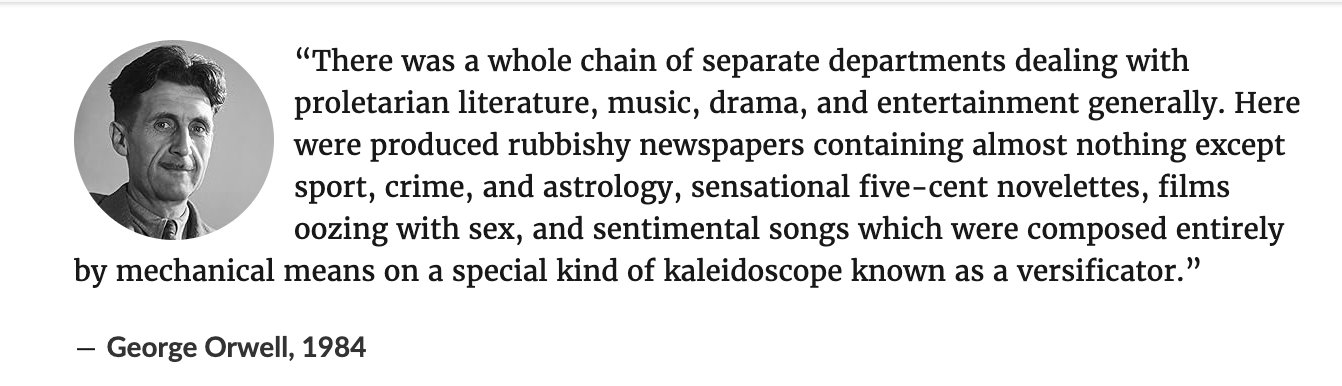
I ain't a historian but I feel we've been here before. Maybe its just me...
Once capitalism exhausts the external world of physical things to commodify, it does not collapse. Instead, it turns inward, shifting from a system of production to a system of simulation. Here, capitalism commodifies its own signs, images, and meanings. A state termed Hyperreality.
— Jean Baudrillard


And so the future of invention may depend not only on our capacity to engineer external systems, but on our ability to govern the internal cybernetics of human agency (Master our inner systems of attention, discipline, desire and self-control). Maintaining signal over noise (Choose Focus over distraction), long-horizon optimization over impulsive payoff (Chase your 'scary' dreams in the long-term over instant reward) and delayed gratification over the local maxima of immediate entropy (Remain disciplined when comfort makes discipline unnecessary).